
Learning Nuggets.

Get to know Lean Studio. Understand Mura, Muri and Muda. Short insights to improve processes in your business and support your professional development.

Understand Mura, Muri and Muda. Practical Lean ideas for your working day.

Discuss your priorities
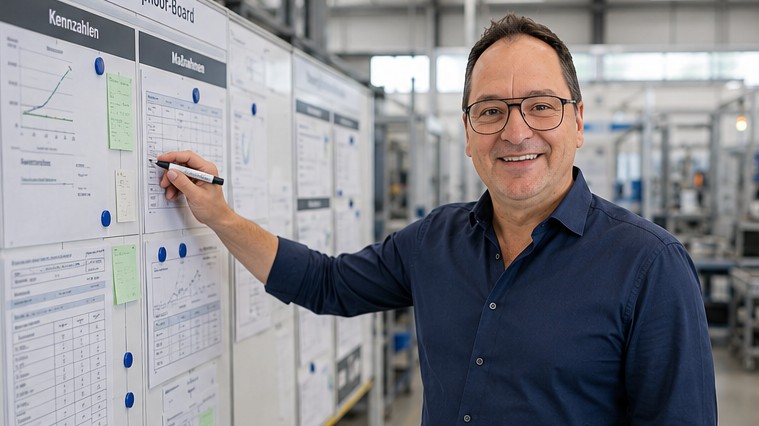
Marco Houillot explaining a topic at a shopfloor board

Marco HouillotA personal perspective

I have learned a great deal from people who openly shared their experience with me. That is why I share insights from my Lean practice here and on LinkedIn, explained clearly and with ideas to try out.

I have learned a great deal from people who openly shared their experience with me. That is why I share insights from my Lean practice here and on LinkedIn, explained clearly and with ideas to try out.

A focus on inventory and transport.

Three short practical insights. Choose a video and press play.

MUDA: Inventory

Supermarket

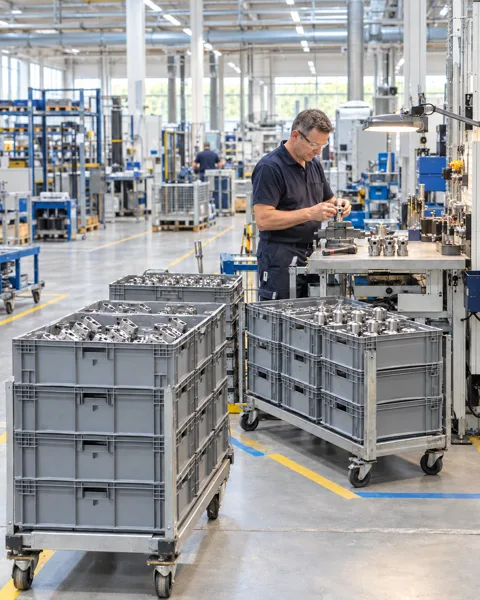
From a full warehouse to demand-driven supply: a lean supermarket keeps materials available while limiting inventory.

Read video description

The video contrasts a full warehouse with an organised material supply area. Labelled bins are arranged in a supermarket and supplied by a tugger train. The aim is lower capital tied up in stock and higher productivity. This is an illustrative example, not a measured client result.


MUDA: Transport and inventory

Milk Run

Combine deliveries, replenish regularly and reduce lot sizes to address transport effort and inventory together.

Read video description

A map first shows separate transport routes and large lots, with inventory rising. Supply is then combined into a milk-run route. Regular collections and smaller deliveries support a leaner supermarket. The video illustrates the principle; it is not a complete route-design guide.

MUDA: Inventory and transport

Line-side material supply

Supply several part numbers in one trip, with coordinated quantities, low days of supply and ergonomic container changes.

Read video description

A forklift brings large containers from the warehouse to the line. High inventory with about five to seven days of supply is explicitly shown as an example. The scene changes to mizusumashi supply, carrying several part numbers in one trip with coordinated quantities. The stated aims are better ergonomics, faster container changes and lower line-side inventory.

Coming soon: the fundamentals.

Get to know Lean Studio and understand Mura, Muri and Muda. These four videos are in preparation.

Video · Coming soon

What is Lean Studio?

Experience that supports shared action.
More about Lean Studio

Marco Houillot connects strategy with shop floor implementation. Working with your team, he helps turn improvements into lasting everyday practice.

Link to this topic
Video · Coming soon

Understanding Mura

Unevenness

Recognise variation. Find the causes.
More about Mura

Mura means unevenness in a process. Understanding its causes helps stabilise workflows and prevent overburden.

Link to this topic
Video · Coming soon

Understanding Muri

Overburden

Recognise overburden. Balance the workload.
More about Muri

Muri means overburdening people or equipment beyond what they can sustainably handle. Matching workloads to capacity prevents overload and also makes underutilisation visible.

Link to this topic
Video · Coming soon

Understanding Muda

Waste

Understand waste. Address the causes.
More about Muda

Muda means waste and is often a symptom. Lasting improvement addresses the underlying causes, including Mura and Muri.

Link to this topic

Strengthen competitiveness.
Move forward together.

Let’s discuss where the greatest opportunities for improvement lie in your business.